How long can you keep bees in a nuc before moving them?
In the active season, expect to transfer within a few weeks. Move bees when frames are well covered and they’re drawing comb quickly — waiting too long increases crowding and swarming risk. A 6-frame nuc buys a little more time than a 5-frame, but plan the full hive set-up in advance.
- Check weekly in spring/summer; look for brood on most frames and good stores.
- Have brood box, floor, crownboard, roof, and a feeder ready.
- Transfer on a calm, mild day; avoid chilling brood.
- Order early: Overwintered Nucs.
- Step-by-step help: Hive How-Tos.
- Related Q&A: What’s the difference between a 5-frame and 6-frame nuc?
Signs your nuc needs more space
The right time to transfer depends on the colony's development, available comb and weather, not just the number of days since delivery. During the active season, look for bees covering the frames, increasing brood, rapid use of available comb and the need for extra laying or storage space. A colony that is congested can become harder to manage and may be more inclined to swarm.


Keep the nuc at its intended location while you prepare the full hive. The new brood box should accept exactly the same frame format, and you should be ready to transfer frames gently in the original order. Check the colony's food stores and provide suitable assistance if forage or weather makes it necessary.
See the step-by-step transfer instructions or compare our National nuc options for your first hive.
FAQs
What if I can’t transfer immediately?
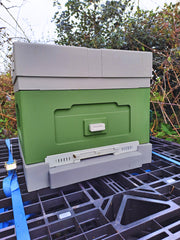
A Poly nuc provides adequate weather protection for long term use. However, the colony will expand rapidly and as such, they need transferring as soon as practicable. Just place the nuc in the place where the hive will be and open the nuc door.
Will waiting harm the colony?
No. The nuc comes with adequate stores for 2 to 3 days. If poor weather persists, add 1 litre of sugar syrup mixed to the feeder.

Swarm or nuc? Swarms are free but unpredictable; nucs are calm, reliable and fast to establish — the best option f...
Packages are cheaper but slow to establish. Nucs include brood, comb and a laying queen—giving beginners a strong,...

The essential starter kit for UK beekeepers: hive, nuc, protective suit, smoker, hive tool and feeder — plus our v...
You can start beekeeping without a course. Self-learning, mentorship, and Jurassic Bees support make it easy for b...

Start with one nuc in spring. Make a split to prevent swarming and create a backup colony — giving beginners two h...